Founder of Mimetic Theory
René Girard
1923–2015. French-American philosopher, literary critic, and anthropologist. Developer of mimetic theory, the scapegoat mechanism, and a groundbreaking account of the origins of human culture and religion.
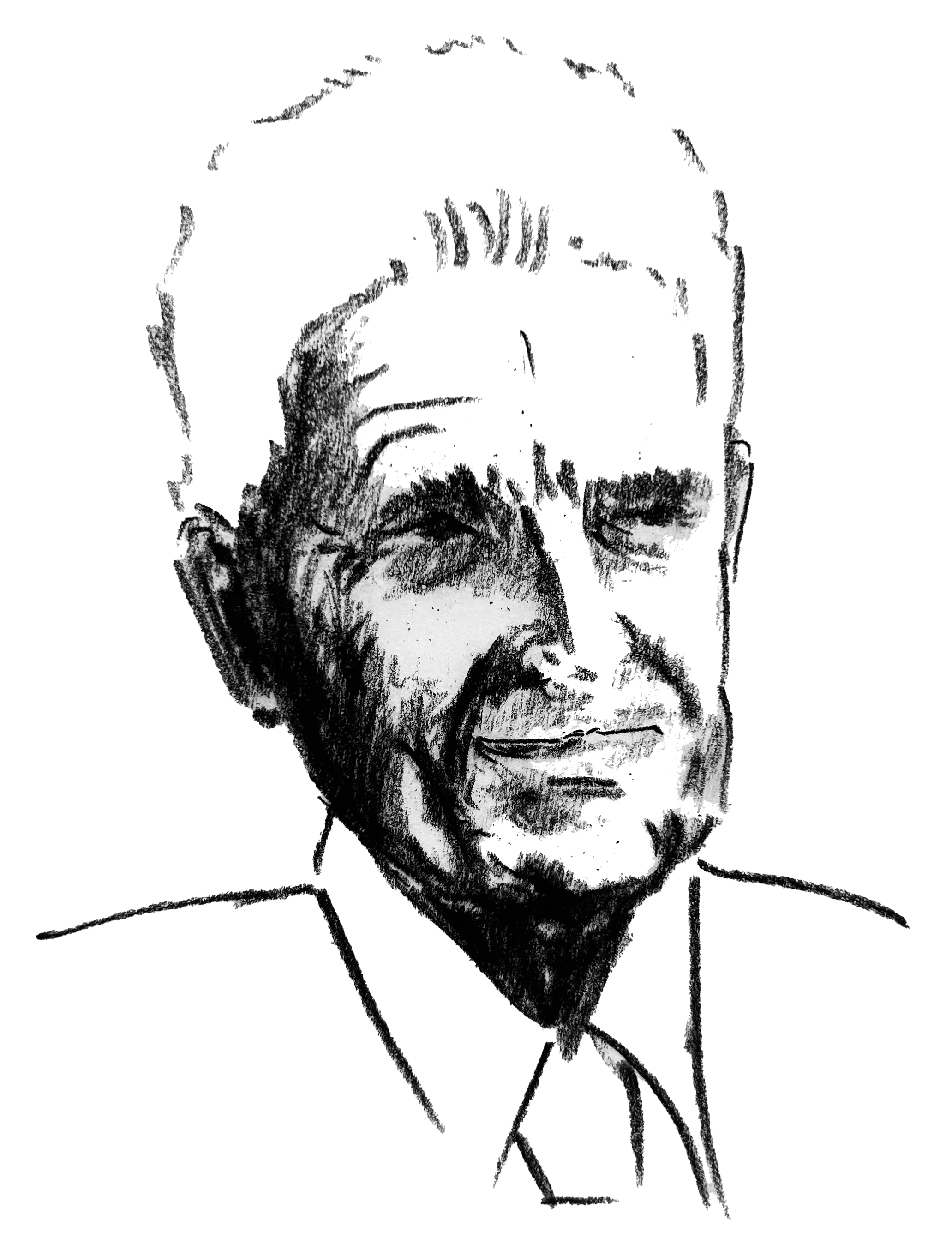
1923–2015. French-American philosopher, literary critic, and anthropologist. Developer of mimetic theory, the scapegoat mechanism, and a groundbreaking account of the origins of human culture and religion.
René Girard is the founder of mimetic theory. He died in 2015 as a member of the elite Académie française — France's highest honor for intellectual contribution — after having spent nearly fifty years elaborating his theory of mimetic desire, mimetic rivalry, scapegoating, and the foundations of human cultures and institutions.
Girard is notoriously hard to classify in a specific discipline. His doctorate degree was in history. His discovery of mimetic theory came from his study of classic literature — Don Quixote, Shakespeare, Proust, and the Russian novelist Dostoevsky, whose psychological realism was due, in Girard's opinion, to his intuitive grasp of how humans want: the mimetic nature of desire. But Girard also dove deeply into anthropology, the philosophy of social sciences, and theology. He was a devout Catholic — which earned him the ire of many in secular academia who couldn't take his thinking on its own terms.
Girard was one of the last great thinkers who was truly a hedgehog, in the words of Isaiah Berlin ("the fox knows many things; the hedgehog knows one very important thing"). Girard's hedgehog insight was mimetic desire — it was like a secret key that unlocked new layers of human relationships and human history. He was genuinely interested in everything, and mimetic theory gave him a single lens through which to interpret the whole of human experience: literature, anthropology, theology, economics, and politics.
René Noël Théophile Girard was born on December 25, 1923, in Avignon, France. He studied medieval history at the École des Chartes in Paris, then emigrated to the United States in 1947. He received his doctorate in history from Indiana University in 1950 and spent his entire academic career in America.
His early positions at Duke, Bryn Mawr, Johns Hopkins, SUNY Buffalo, and Emory University gave way to his most productive years at Stanford University, where he held the Andrew B. Hammond Professor of French Language, Literature, and Civilization chair until his retirement in 1995. At Stanford, he taught and mentored a generation of students who went on to significant careers in technology, finance, and academia — among them Peter Thiel, the co-founder of PayPal and Palantir, who cites Girard's teaching as a major influence in his life and work.
Girard's intellectual development moved through three main phases, each corresponding to a major discovery:
He continued to write and speak until shortly before his death on November 4, 2015, in Stanford, California, at the age of 91.
Girard's work is more relevant than ever because it provides the most penetrating explanation of human conflict — with roots in anthropology and a fundamental role for desire in generating violence. Many of the most complex issues facing the world today — from social media contagion to violent political polarization to the dynamics of cancel culture — are illuminated in a dramatic way by his theory.
The Colloquium on Violence and Religion (COV&R), founded in 1990, continues to advance research in mimetic theory. The Imitatio foundation supports academic work in this tradition. Girard's influence extends across disciplines: literary criticism, theology, economics, psychology, political science, and philosophy of religion.
If you'd like to see Girard in his element — including some vintage smoking — check out this interview from 1970s French television. It gives a vivid sense of his intellectual energy and his characteristic willingness to synthesize across all disciplines.
Anti-Mimetic
Weekly short-form thoughts on mimetic desire, culture, and what it means to want freely. No essays — bullets.
Fridays · Free · Unsubscribe anytime